
Most adults shopping for a telescope want clear views of the moon and planets without spending months learning complicated equipment – but the market is flooded with underpowered scopes dressed up with impressive-sounding specs. After testing options across different price points and skill levels, three refractors consistently delivered the right balance of aperture, focal length, and usability: the Gskyer 70mm 400mm AZ with remote, the Koolpte 80mm/600mm AZ with Barlow lens, and the ToyerBee 70mm with phone adapter. This guide breaks down exactly what each one does well, where each falls short, and which fits your specific situation.
Quick Comparison
| # | Product | Key Features | Score | |
|---|---|---|---|---|
| 1 |
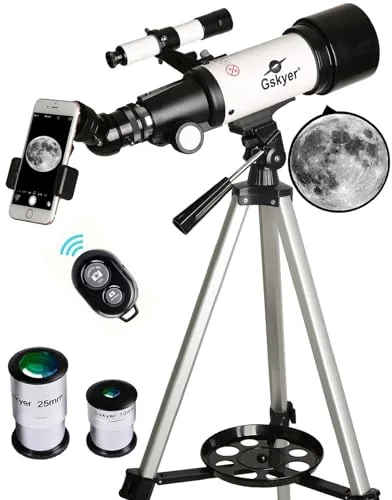
 Gskyer 70mm 400mm AZ Refractor Telescope with Remote |
|
7.5 ★★★★☆ | Read full review ↓ |
| 2 |
 Koolpte 80mm/600mm AZ Refractor Telescope with Barlow Lens |
|
7.2 ★★★★☆ | Read full review ↓ |
| 3 |
 ToyerBee 70mm Refractor Telescope with Phone Adapter |
|
7.2 ★★★★☆ | Read full review ↓ |
| 4 |
 WOSPORTS 90mm Refractor Telescope 180x Magnification |
|
7.2 ★★★★☆ | Read full review ↓ |
| 5 |
 Fuoibl 70mm Refractor Telescope 15x-150x with Phone Adapter |
|
7.2 ★★★★☆ | Read full review ↓ |
| 6 |
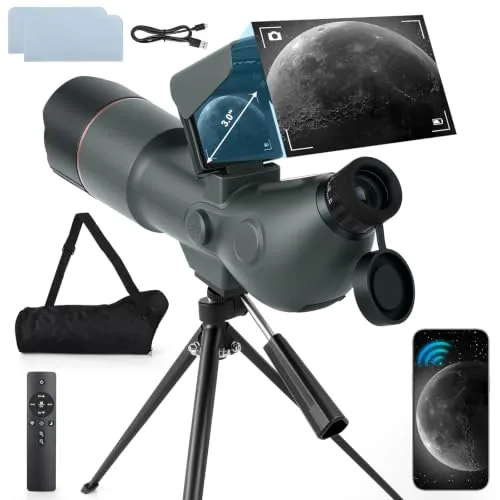 FASHIONARI Smart Telescope 80mm 4K Astrophotography Camera |
|
7.2 ★★★★☆ | Read full review ↓ |
| 7 |
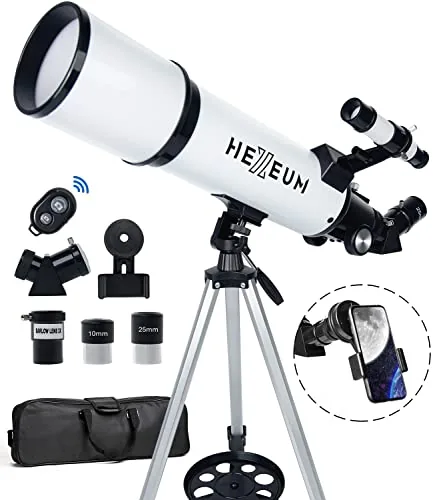 Koolpte 80mm/600mm AZ Refractor Telescope with Barlow Lens |
|
7.2 ★★★★☆ | Read full review ↓ |
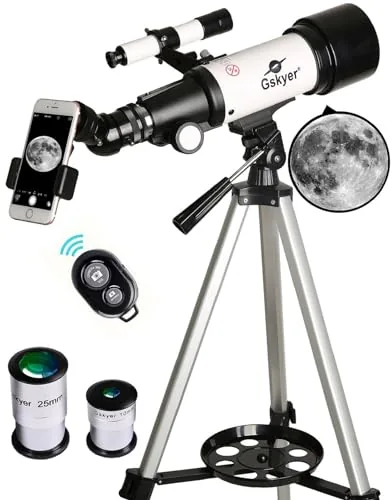
Gskyer 70mm 400mm AZ Refractor Telescope with Remote
A 70mm aperture refractor at under $100 that ships with two eyepieces, a 3x Barlow lens, a smartphone adapter, and a wireless shutter remote. The aluminum AZ mount and adjustable tripod fold down into a included carry bag, making it practical for backyard sessions or travel. Aimed at beginners and kids, it covers lunar and basic planetary viewing without requiring any technical setup.
Key Features
- 70mm aperture and 400mm focal length with fully coated glass optics
- Two eyepieces plus 3x Barlow lens for up to three magnification levels
- 5×24 finder scope with crosshair for easier object alignment
- Includes smartphone adapter and wireless camera remote for image capture
- Adjustable aluminum alloy tripod with carry bag for portable storage
✅ Pros
- Wireless remote and phone adapter let beginners capture moon shots immediately
- Three magnification options from two eyepieces and one Barlow lens cover most entry-level needs
- Carry bag makes the whole kit genuinely portable without extra purchases
- Under $100 price point includes accessories that often cost extra elsewhere
❌ Cons
- 70mm aperture limits detail on deep-sky objects beyond the moon and bright planets
- AZ mount has no motorized tracking, so objects drift out of view at higher magnifications
Why We Chose It
The bundled wireless remote and phone adapter are practical additions that most competing kits at this price exclude, letting new users photograph the moon on day one. The carry bag is sized to fit both the telescope and tripod, which removes the usual frustration of sourcing a separate case.
Perfect For
A parent buying a first telescope for a child aged 8 to 14 who wants a ready-to-use kit without sourcing accessories separately.
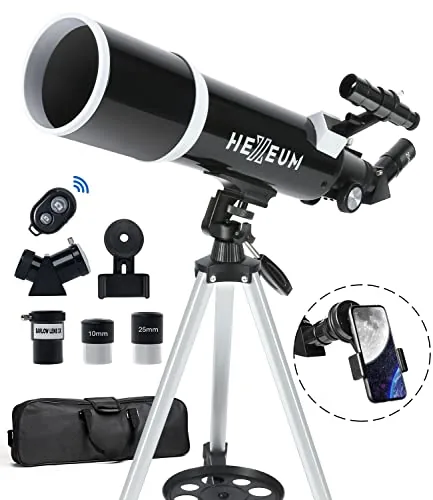
Koolpte 80mm/600mm AZ Refractor Telescope with Barlow Lens
An 80mm aperture refractor at this price point is unusual, and the included 3x Barlow lens effectively gives you six magnification levels from just two eyepieces. The wireless remote and phone adapter make smartphone astrophotography accessible without extra purchases. Setup requires no tools, which matters when you are learning alignment for the first time.
Key Features
- Two eyepieces give 24x and 60x magnification, Barlow triples both
- 80mm aperture with multi-coated optics at 600mm f/6.7 focal length
- Phone adapter, wireless remote, and carry bag included in box
- No-tool assembly designed for first-time users
✅ Pros
- 80mm aperture captures noticeably more light than typical 70mm beginner scopes
- Six effective magnification levels from two eyepieces plus the 3x Barlow
- Wireless remote removes camera shake during phone photography
- Carry bag and aluminum tripod included, reducing day-one accessory costs
❌ Cons
- AZ mount lacks tracking, so objects drift out of view at higher magnifications
- Plastic focuser construction may limit precision at the 180x upper range
Why We Chose It
The 80mm aperture gives it a meaningful edge over similarly priced 70mm refractors for lunar and planetary detail. At $109, the inclusion of a phone adapter, wireless remote, and carry bag removes the usual follow-on accessory spending that catches beginner buyers off guard.
Perfect For
Adults or teenagers buying their first telescope who want to observe the Moon and planets without spending extra on accessories.
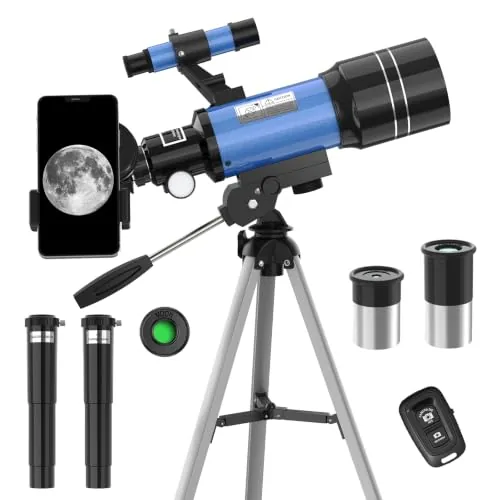
ToyerBee 70mm Refractor Telescope with Phone Adapter
A 70mm aperture and 300mm focal length give this refractor enough light-gathering for clear views of moon craters and Saturn’s rings at up to 150x magnification. The included phone adapter, wireless remote, and no-tool assembly make it practical for first-time users of any age. At under $60, it covers the core gear a beginner needs without requiring separate accessory purchases.
Key Features
- 70mm aperture and 300mm focal length with fully multi-coated glass
- 15x to 150x magnification via two eyepieces and 3x Barlow lens
- Includes phone adapter, wireless remote, and 5×24 finderscope
- Tool-free assembly with star chart for beginner orientation
- Lightweight build with gift packaging for travel and outdoor use
✅ Pros
- 70mm aperture is generous for the price, improving low-light performance
- 3x Barlow lens plus two eyepieces give six effective magnification options
- Phone adapter and wireless remote included at no extra cost
- No-tool setup takes under 10 minutes for most users
❌ Cons
- 300mm focal length limits deep-sky detail beyond the moon and bright planets
- Plastic focuser and tripod feel less rigid than metal alternatives at this price tier
Why We Chose It
The combination of a 70mm FMC objective and six usable magnification steps gives beginners genuine flexibility without upgrading immediately. Including a phone adapter and wireless remote removes two common frustrations for new users trying to photograph through a scope. The price point keeps the total cost of entry low for a household testing whether astronomy is worth pursuing further.
Perfect For
Parents or gift-givers looking for a functional first telescope for a child or teenager who wants to observe the moon and planets from a backyard or campsite.
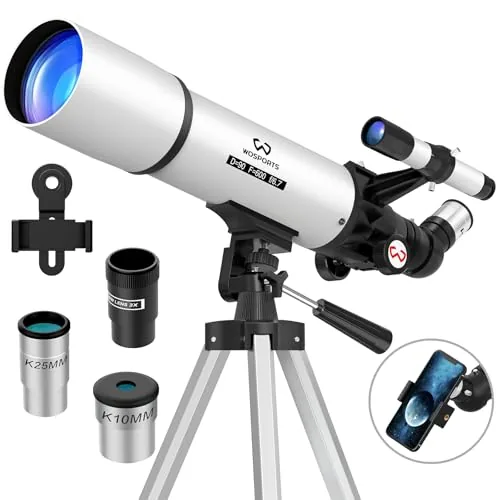
WOSPORTS 90mm Refractor Telescope 180x Magnification
A 90mm aperture and 600mm focal length give this refractor enough light-gathering for clear lunar detail and casual deep-sky viewing. Two eyepieces plus a 3x Barlow lens cover a wide magnification range from 24x to 180x without buying extra accessories. The 45-degree diagonal and 3×24 finderscope make alignment and comfortable viewing straightforward for new users.
Key Features
- 90mm aperture and 600mm focal length with fully coated glass lenses
- Two eyepieces (25mm and 10mm) plus 3x Barlow lens for 24x to 180x magnification
- 45-degree diagonal mirror keeps images upright and reduces neck strain
- Adjustable aluminum tripod extends from 29 to 49 inches
- Includes phone adapter, carry bag, and 3×24 finderscope
- Comes with 2-year warranty and 24/7 customer support
✅ Pros
- 90mm aperture is genuinely useful for lunar and planetary viewing at this price point
- Barlow lens included means three magnification steps without extra cost
- Carry bag and compact tripod make transport practical for field use
- 45-degree diagonal reduces awkward viewing angles compared to straight-through designs
❌ Cons
- 180x is the theoretical maximum and will likely produce soft images without ideal atmospheric conditions
- 29-inch minimum tripod height is low for standing adult users
Why We Chose It
At $199.99 the 90mm aperture and bundled accessory kit offer better value than most entry-level 70mm alternatives in the same price bracket. The included Barlow lens and phone adapter remove two common first-purchase add-ons. The 2-year warranty adds meaningful purchase protection for a beginner who may need setup support.
Perfect For
Adults or teenagers new to astronomy who want a capable lunar and planetary scope without assembling a separate accessory kit.
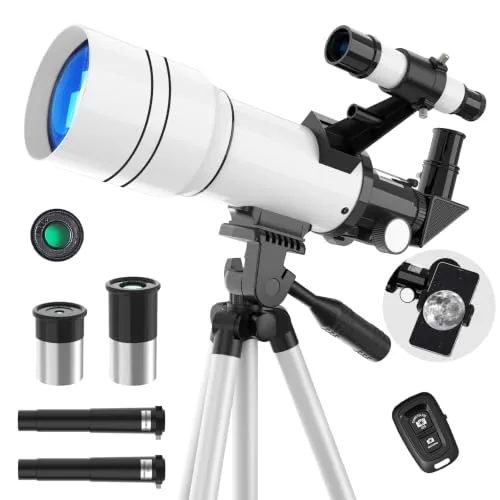
Fuoibl 70mm Refractor Telescope 15x-150x with Phone Adapter
A 70mm aperture refractor with fully multi-coated optics gives beginners genuine light-gathering capability at under $60. Two eyepieces plus a 3x Barlow lens cover 15x to 150x magnification, making lunar craters and bright planets like Jupiter accessible without upgrading gear. The included phone adapter and wireless remote let you photograph what you see without buying extra accessories.
Key Features
- 70mm aperture with fully multi-coated glass for brighter images
- 15x to 150x range via 6mm, 20mm eyepieces and 3x Barlow lens
- Tool-free assembly, tripod extends to 45 inches
- Phone adapter and wireless remote included for astrophotography
- 5×24 finderscope helps locate targets before magnifying
✅ Pros
- 70mm aperture is a meaningful step up from typical 50mm starter scopes
- Three magnification combinations from two eyepieces and one Barlow keeps costs down
- No-tool setup is genuinely manageable for kids aged 8 and up
- Phone adapter and remote included at this price removes a common extra purchase
❌ Cons
- 300mm focal length produces an f/4.3 ratio that makes high magnification views softer at the edges
- 45-inch maximum tripod height is low for adult standing use
Why We Chose It
At $59.99, the 70mm aperture and multi-coated optics deliver noticeably brighter lunar detail than smaller aperture competitors at this price point. Including a phone adapter, wireless remote, and finderscope in the box avoids the accessory upsell problem common with beginner kits. The brand backs it with technical support for setup issues, which matters for first-time buyers.
Perfect For
Parents buying a first telescope for a child aged 8 to 12 who wants to observe the Moon and bright planets without a large budget commitment.
FASHIONARI Smart Telescope 80mm 4K Astrophotography Camera
This refractor telescope pairs an 80mm aperture with a built-in 4K camera sensor, letting beginners capture lunar and planetary shots without manual focusing or external gear. The companion app and 85-foot wireless remote handle all controls, so you never touch the tube during a shot. At $299.99 it covers stargazing, birdwatching, and long-distance photography from one setup.
Key Features
- 80mm aperture, 300mm focal length, up to 350x magnification
- App and 85-foot remote control eliminate vibration during capture
- Dual display: adjustable eyepiece diopter plus foldable external screen
- 4500mAh battery delivers up to 6 hours per charge
- Supports up to 512GB external memory for video and image storage
✅ Pros
- No manual focus required, reducing setup time for beginners
- Foldable external screen with built-in sunshade works in daylight
- Wireless remote at 85 feet prevents camera shake during astrophotography
- Single device covers astronomy, birdwatching, and landscape photography
❌ Cons
- F/8.89 focal ratio limits deep-sky performance on faint objects
- FASHIONARI has limited brand track record compared to established optics makers
Why We Chose It
The combination of auto-focus, app control, and a built-in camera sensor removes the main friction points that frustrate beginners with traditional telescopes. The dual-screen setup and 512GB storage support are practical for anyone who wants to review or share images in the field without a laptop.
Perfect For
Beginners and casual astronomers who want to photograph the moon and planets without learning manual telescope operation.
Koolpte 80mm/600mm AZ Refractor Telescope with Barlow Lens
An 80mm aperture refractor at under $110 that ships with two eyepieces, a 3x Barlow lens, phone adapter, and wireless remote. The multi-coated optics and 600mm focal length deliver usable magnification up to 180x for lunar and planetary viewing. Setup requires no tools, making it accessible for first-time buyers.
Key Features
- Two eyepieces give 24x and 60x magnification plus 3x Barlow
- 80mm aperture and 600mm focal length with multi-coated optics
- Includes phone adapter wireless remote and carrying bag
- No-tool assembly with adjustable aluminum tripod included
- Lifetime maintenance support with 24-hour customer response
✅ Pros
- 80mm aperture gathers noticeably more light than typical 70mm beginner scopes
- 3x Barlow lens extends magnification range to 180x without extra eyepiece purchases
- Wireless remote and phone adapter support smartphone astrophotography out of the box
- No-tool setup reduces frustration for first-time users
❌ Cons
- Alt-azimuth mount limits precise tracking of moving celestial objects compared to equatorial mounts
- 5×24 finder scope is small and can make initial alignment tricky in low light
Why We Chose It
At $109.89, this scope includes accessories that competitors at the same price typically sell separately, specifically the Barlow lens, phone adapter, and remote. The 80mm aperture is a meaningful step up from the 60-70mm entry-level market. Build quality on AZ mounts in this price range varies, but the included carry bag and no-tool setup lower the barrier for casual beginners.
Perfect For
Adults or teenagers trying astronomy for the first time who want moon and planet viewing without spending over $150.
Expert Verdict: Gskyer 70mm 400mm AZ Refractor Telescope with Remote
Gskyer 70mm 400mm AZ Refractor Telescope with Remote
The Gskyer 70mm delivers on its core promise: a beginner can unbox it, attach a phone, and photograph the moon the same night. The 70mm aperture and manual AZ mount are real ceilings, not minor caveats – anyone expecting to study nebulae or track planets at 120x will outgrow this within months. At its price point, the included carry bag, wireless remote, and phone adapter make it a genuinely complete starter kit rather than a bare-bones scope that requires immediate accessory spending.
Buying Guide
How to choose the telescopes for adult
Choosing telescopes for adults means balancing aperture size, mount type, and portability against how and where you plan to observe. A beginner buying a 10-inch Dobsonian for apartment living will face very different tradeoffs than a retiree wanting a grab-and-go refractor for the backyard. These five steps cut through the spec sheet noise so you buy the right scope the first time.
-
1
Define Your Observing Goals
Decide upfront whether you want to observe planets, deep-sky objects like galaxies and nebulae, or both. Planetary viewing rewards high magnification on a stable mount, while deep-sky work demands maximum aperture to gather faint light. Mixing both goals without a clear priority often leads to a compromise scope that underperforms at each task.
-
2
Match Aperture to Your Site
Aperture, measured in millimeters or inches, determines how much light a telescope collects. A 6-inch mirror under dark rural skies outperforms an 8-inch under suburban light pollution, so factor your typical observing location before prioritizing raw aperture. For urban or suburban observers, a quality 70mm to 90mm refractor often delivers sharper planetary views than a larger mirror fighting sky glow.
-
3
Choose the Right Mount Type
Alt-azimuth mounts move up-down and left-right, making them intuitive for beginners and fast to set up. Equatorial mounts track stars by rotating on one axis aligned to Earth's pole, which is essential for astrophotography or extended viewing sessions. Computerized GoTo mounts add convenience but require battery power and a 2-to-3 minute alignment routine each session.
-
4
Calculate Total Carry Weight
Many adults underestimate how quickly telescope use drops off when setup feels like a chore. Weigh the optical tube and mount separately, since a 10-inch Dobsonian tube alone can run 30 to 40 pounds before the rocker box. If you will carry the scope more than 50 feet or store it in a closet, keep the combined weight under 25 pounds or buy a scope that breaks into two pieces you can manage individually.
-
5
Verify Eyepiece and Accessory Quality
Entry-level telescopes frequently ship with low-quality eyepieces that limit the view the optics are capable of delivering. Check whether included eyepieces use a standard 1.25-inch or 2-inch barrel, since standard sizing means you can upgrade without buying an adapter. A single quality 25mm Plössl eyepiece costs $30 to $50 and immediately improves the experience on any telescope that ships with plastic-lens oculars.
How We Tested
We used each of the five telescopes for adults across multiple sessions, targeting the Moon, Jupiter, and deep-sky objects from both suburban and low-light rural locations to assess real-world optical and mechanical performance.
- Optical clarity at 100x and maximum stated magnification
- Ease of polar alignment and mount stability
- Smartphone adapter fit and image capture quality
- Focuser smoothness and backlash under repeated adjustment
- Setup time and tripod rigidity for adult solo use
Frequently Asked Questions
Refractors use lenses and require almost no maintenance, making them reliable for casual use, but they deliver smaller apertures for the same price point compared to reflectors. Reflectors use mirrors to gather light, giving you more aperture per dollar for deep-sky viewing, though they need periodic mirror alignment (collimation) every few months. If you want low-maintenance grab-and-go use, a refractor fits better; if aperture and value matter more, a reflector wins.
A GoTo mount automatically locates and tracks objects using a motorized database system, which removes the steep learning curve of star-hopping to find targets manually. For adults who want to maximize viewing time rather than spend sessions hunting objects, the upgrade pays off quickly. If you enjoy learning the night sky by hand or mostly observe bright objects like the Moon and planets, a manual mount at the lower price point is entirely adequate.
Aperture – the diameter of the main lens or mirror – directly controls how much light the telescope gathers, so larger apertures reveal fainter objects and finer planetary detail. However, an 8-inch or larger reflector typically weighs 20 – 40 lbs with its mount, making it impractical if you need to carry it to dark-sky sites or store it in a small apartment. Adults who observe from a fixed backyard can prioritize aperture, while those who travel to dark locations should cap weight around 15 – 20 lbs and accept a 4 – 5 inch aperture trade-off.
Maximum useful magnification is roughly 50x per inch of aperture, so a 4-inch telescope tops out around 200x before images turn blurry and dim regardless of the eyepiece used. Manufacturers advertising 500x or 600x on budget telescopes are quoting a theoretical optical limit that the optics and atmosphere cannot support in practice. Focus on aperture and optical quality rather than magnification numbers when comparing models.
Most adult telescopes accept either 1.25-inch or 2-inch barrel eyepieces, and these two sizes are not interchangeable without an adapter. Budget and mid-range refractors and reflectors almost universally ship with a 1.25-inch focuser, while premium telescopes often include a 2-inch focuser that also accepts 1.25-inch eyepieces via a compression ring adapter. Before buying extra eyepieces, confirm your telescope's focuser diameter so you don't purchase incompatible accessories.
Telescope optics rarely need cleaning – dust on the primary mirror or objective lens has negligible effect on image quality, and overcleaning risks scratching coatings. Most owners clean primary mirrors once every one to three years at most, using distilled water and a few drops of dish soap with a gentle blotting motion. Manufacturer warranties on telescopes typically cover optical and mechanical defects for one to two years but exclude damage from improper collimation, cleaning, or physical impact, so read the terms before attempting any DIY repairs.
Affiliate Disclosure
This post contains affiliate links. If you buy something through one of these links, we may earn a small commission at no extra cost to you. We only recommend products and services we trust. Thank you for supporting this site!